| 2026 | ||
| Wednesday, April 15th | ||
|---|---|---|
| 10:15 AM |
A Review of the Synthesis of Iridium-Based Catalysts for PEM Water Electrolysis Using MSS Methods Oscar Chaplin, Illinois Math and Science Academy A115 10:15 AM - 11:00 AM Proton exchange membrane (PEM) water electrolysis is a promising pathway for green hydrogen production. However, the method’s efficiency is limited by the slow kinetics of the acidic oxygen-evolution reaction (OER); the only currently effective catalysts are primarily Iridium, a rare and expensive metal, limiting large-scale production. This review examines Molten Salt Synthesis (MSS) as a versatile, scalable strategy to engineer ... Read More |
|
| 10:15 AM |
Advanced AI approaches for Electrolyte Discovery* Tyler He, Illinois Math and Science Academy A115 10:15 AM - 11:00 AM With the world increasingly relying on rechargeable batteries, the discovery of cheaper and more efficient batteries has grown in importance. It is impractical and expensive to discover new materials through repeated experiments sifting through possible electrolyte/solvent/additive candidates. Computational techniques are an alternative to this by calculating the properties between these molecules in realistic and accurate simulations. However, many of these ... Read More |
|
| 10:15 AM |
AI-Driven Identification of Therapeutic Targets for Amyotrophic Lateral Sclerosis Using PandaOmics Anusha Saraf, Illinois Math and Science Academy A155 10:15 AM - 11:00 AM Amyotrophic Lateral Sclerosis (ALS) is a progressive neurodegenerative disease that causes the degeneration of motor neurons and leads to muscle weakness, paralysis, and eventually respiratory failure. Despite advances in understanding ALS genetics, effective treatments remain limited, highlighting the need to identify new therapeutic targets. This project investigates the use of PandaOmics, an artificial intelligence–driven target discovery platform, to identify genes ... Read More |
|
| 10:15 AM |
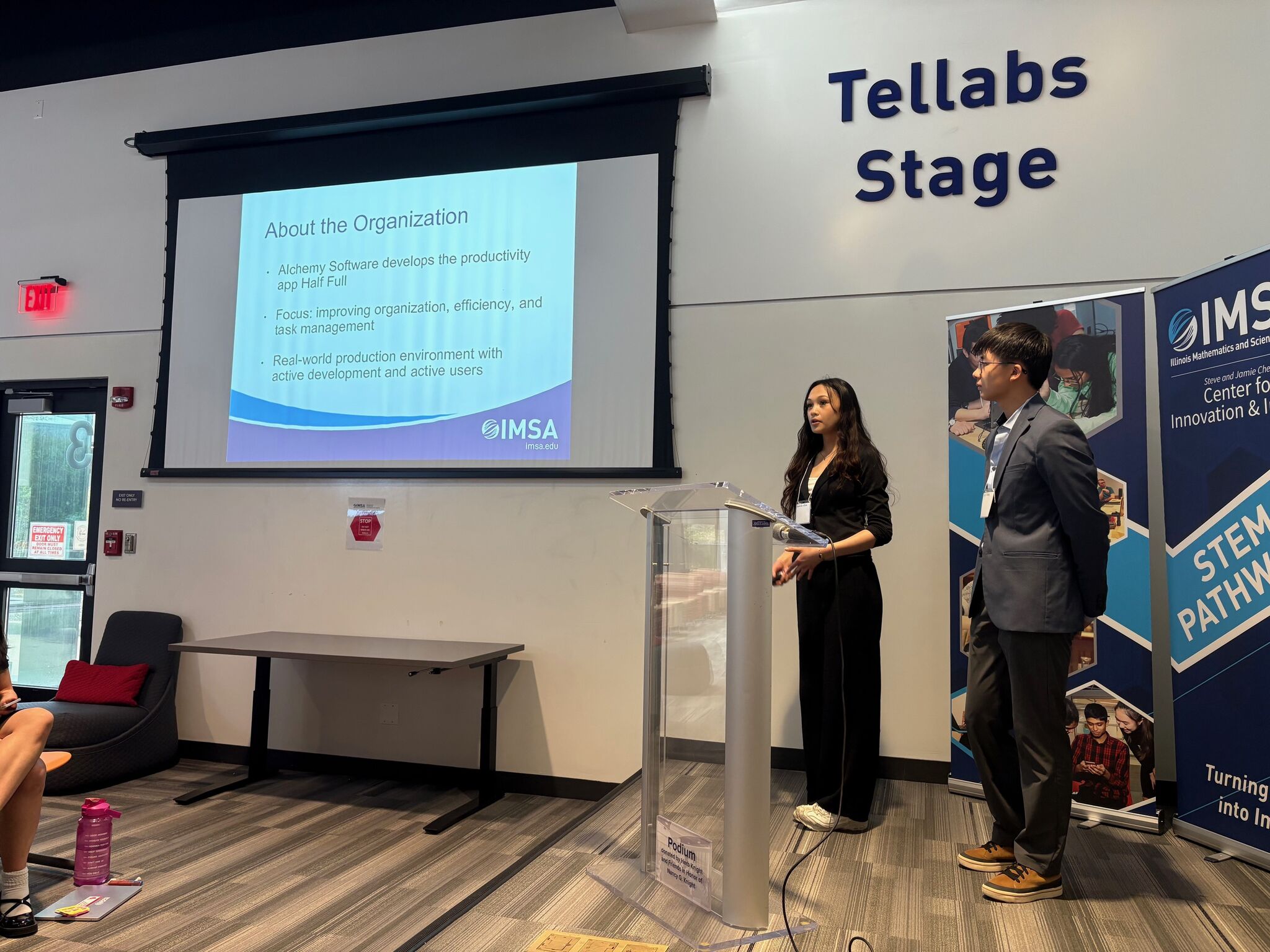
Alchemy Software Application Development Isabella, Alban,, Illinois Math and Science Academy IN2 Commomns 10:15 AM - 11:00 AM Alchemy Software is a company that focuses on its productivity application, Half Full. The internship is split up into numerous projects that serve as features for the productivity application. Over the course of the school year, these projects included the implementation of a local database to keep valuable user data safe, an AI email reader to generate actionable tasks to ... Read More |
|
| 10:15 AM |
An AI-based Lung Sound Classification System Maximiliano Vazquez, Illinois Math and Science Academy A121 10:15 AM - 11:00 AM When screening for respiratory diseases, the primary form of diagnosis is auscultation, which, without proper training and experience, can yield unreliable or incorrect results. This presents an issue, as many parents lack the experience or knowledge to diagnose children at an early age. Within this SIR, I’ve explored various systems that are utilized or closely related to the development of ... Read More |
|
| 10:15 AM |
Assessing Knee Joint Loading Patterns During Gait in People Post-Stroke Ria Bakshi,, Illinois Math and Science Academy A129 10:15 AM - 11:00 AM Post-stroke neuromuscular impairments can alter gait patterns, leading to aberrant knee joint loading. Changes in knee loads can result in cartilage damage and joint pain, which is associated with a reduction in mobility and greater risk for developing osteoarthritis that can inhibit activities of daily living. Using musculoskeletal models in OpenSim, we estimated knee joint compressive loads for control (N=8) ... Read More |
|
| 10:15 AM |
Lucy Ferron, Illinois Math and Science Academy A113 10:15 AM - 11:00 AM Acute myeloid leukemia (AML) is an aggressive cancer in which early diagnosis is critical to patient outcomes. Manual analysis of bone marrow and blood smears remains the standard method of diagnosis. In this study, a random forest model was developed to classify AML cell images as malignant or non-malignant using the AML-Cytomorphology dataset from the Munich Leukemia Laboratory (MLL) at ... Read More |
|
| 10:15 AM |
Aitran Le, Illinois Math and Science Academy A151 10:15 AM - 11:00 AM Abstract/Project Intention: Substitution urethroplasty for the treatment of male stricture disease is often accompanied by subsequent tissue fibrosis and secondary stricture formation. Patients with pre-existing morbidities are often at increased risk of urethral stricture recurrence brought upon in-part by delayed vascularization accompanied by overactive inflammatory responses following surgery. Within the context of this study, we demonstrate the functional utility of ... Read More |
|
| 10:15 AM |
Computer Vision and Audio-Driven Control of a Robotic Prosthetic Arm* Sofia Alvarado, Orjuela, Illinois Math and Science Academy A150 10:15 AM - 11:00 AM Robotic prosthetic arms typically rely on muscle-based control systems, but alternative approaches may enable more flexible interaction with the environment. This project explores the use of artificial intelligence and external sensing to control a robotic arm using environmental inputs rather than direct muscle signals. An ESP32 microcontroller connects the robotic arm to a computer via Bluetooth, allowing commands generated through ... Read More |
|
| 10:15 AM |
Construction and Testing of a Gas Centrifuge for Carbon Capture Chris Chris, Illinois Math and Science Academy B108 10:15 AM - 11:00 AM Increasing levels of Carbon Dioxide in the atmosphere have significantly hastened the process of global warming and are causing extreme climate alteration. (Ripple 2025) Many methods of Carbon Dioxide capture have been tested such as cryogenic storage, biochemical membranes, and liquid scrubbers of specifically coal emissions. (Bouaboula 2024) Gas centrifuges are also usable for carbon sequestration, modifying the original design ... Read More |
|
| 10:15 AM |
Control vs. Congestion: Learning to Untangle Mixed-Autonomy Flow Kalyan Cherukuri,, Illinois Math and Science Academy B115 10:15 AM - 11:00 AM Recent advancements in vehicle autonomy have spurred interest in understanding the impact of autonomous vehicles on traffic systems. In this paper, we study a traffic assignment problem in a mixed-autonomy setting where both human-driven and autonomous vehicles coexist. We model the interaction between the two types of vehicles as a simultaneous routing game, where human drivers act selfishly to minimize ... Read More |
|
| 10:15 AM |
Correlation between miRNA expression and presence of bronchoalveolar carcinoma in dog lung sample Ashlyn Gupta, Illinois Math and Science Academy 10:15 AM Biological effects of radiation exposure are often not immediately apparent. Although radiation damages cellular DNA, symptoms typically manifest later, following cellular attempts to repair the damage. If these repair processes are unsuccessful or inaccurate, they can lead to health complications. To study these delayed effects, scientists rely on biomarkers of radiation exposure that reveal radiation-induced biological changes. Tissue samples from ... Read More |
|
| 10:15 AM |
Anaika Bhagta, Illinois Math and Science Academy A123 10:15 AM - 11:00 AM DDX18 is a DEAD-box RNA helicase primarily known for its role in maintaining the stemness of cells by positively regulating ribosome synthesis. Furthermore, higher expression of DDX18 is positively associated with tumor growth in multiple tissue origins. Proximity labeling in tandem with mass spectroscopy revealed interactions between DDX18 and centromeric protein CENPA. It has been previously demonstrated that centromeres and ... Read More |
|
| 10:15 AM |
Deep Learning-Based Gleason Classification of Prostate Cancer using Phikon-v2* Shriya Koduri, Illinois Math and Science Academy A1113 10:15 AM - 11:00 AM Prostate cancer (PrCa) is the second leading cause of cancer-related death in American men. Although mechanisms to determine PrCa aggressiveness exist, they are subject to significant inter-observer variability. One example is Gleason grading, which determines PrCa severity based on glandular morphology. Scoring variability, which occurs even between experienced pathologists, poses a challenge when developing treatments. A promising way to mitigate ... Read More |
|
| 10:15 AM |
Design and testing of an sEMG based bellow-the-elbow prosthetic Vidhan Jain, Illinois Math and Science Academy A131 10:15 AM - 11:00 AM Below-the-elbow prosthetics are expensive and offer limited reliability. Most use surface electromyography for prosthetic control due to its non-invasive nature. However, current systems require up to eight sensors, increasing cost and power consumption. Alternatively, this underactuated prosthetic design uses six sEMG placed on major muscle groups, mitigating signal degradation arising from variations in body size, movement, perspiration, etc. A bandpass ... Read More |
|
| 10:15 AM |
Developing a Braitenberg Controller for Autonomous Navigation in Duckietown Ritika Rudrapati, Illinois Math and Science Academy A119 10:15 AM - 11:00 AM The Duckietown Project was created by the MIT graduate class in 2016, and has transformed into a worldwide program. The Duckietown platform uses a robot consisting of cameras, actuators, and April Tags to navigate a modular cityscape. This research focuses on developing autonomous robots that integrate internal and external sensors with image processing to interpret their surroundings. The research aims ... Read More |
|
| 10:15 AM |
Developing a Quantitative Analysis Through IR Spectroscopy Harrison Jang, Illinois Math and Science Academy A133 10:15 AM - 11:00 AM Quantitative analysis of chemical compositions is a crucial process within industries such as pharmaceuticals. Improper methods of obtaining mixture concentrations can directly impact the safety and products within these industries. However, when it comes to obtaining the data, the process is labor-intensive or not as efficient. The purpose of this project is to offer an effective framework for analyzing chemical ... Read More |
|
| 10:15 AM |
Effects of Pulses on Insulin Sensitivity: A Comprehensive Review of Clinical Trials Skyelar Reuter, Illinois Math and Science Academy a119 10:15 AM - 11:00 AM Type 2 diabetes mellitus (T2DM) is a chronic, preventable metabolic disease in which the body becomes resistant to insulin, leading to increased blood glucose levels and contributing significantly to global mortality. Diet is the largest factor in the prevention and management of T2DM. Pulses, the edible seeds of legumes, including beans, lentils, chickpeas, and peas, are nutrient-dense foods rich in ... Read More |
|
| 10:15 AM |
Electrochemical Formation of Metal Based Redox Agents Using Water Ethan Hunt, Illinois Math and Science Academy A149 10:15 AM - 11:00 AM As an abundant and inert input, water remains a north star of green chemistry. Our research leverages water and green energy inputs (electricity), via cyclic voltammetry, to renewably and sustainably form metal-based reduction and oxidation agents. The reduction agent formed is the cobalt hydride (Co1+–H1- ) species of Cobalt(dppv)2(BF4)2 (dppv = diphenylphosphinovinyl). This species is markedly different from the Co3+–H1 ... Read More |
|
| 10:15 AM |
Evaluating the Vulnerability of Deepfake Detectors to Multimodal Adversarial Attacks* Aarav Shah, Illinois Math and Science Academy A121 10:15 AM - 11:00 AM The rapid spread of AI-generated video has made robust deepfake detection essential for public trust and media integrity. Although current detectors perform well on standard benchmarks, prior studies show they remain highly vulnerable to adversarial perturbations. Yet, existing research primarily evaluates single-modality attacks, leaving open the question of whether coordinated audio-visual perturbations can further compromise detector reliability. This project aims ... Read More |
|
| 10:15 AM |
Evaluating Training Methods for Energy-Based Models* Eric Lee, Illinois Math and Science Academy A113 10:15 AM - 11:00 AM Energy-Based Models (EBMs) are a generative machine learning framework that can be applied to many types of data. They work by learning the energy function in a Boltzmann distribution, which measures the compatibility between the input and the target data distribution. Training EBMs probabilistically can be difficult since it requires calculating the partition function, which integrates over all possible inputs, ... Read More |
|
| 10:15 AM |
Sai Ganbote, Illinois Math and Science Academy 10:15 AM - 11:00 AM Adolescents entering residential substance use treatment frequently present with co-occurring internalizing symptoms, including depression and anxiety. Although racial and ethnic disparities in youth mental health have been documented in research, findings are mixed and often fail to account for socioeconomic status (SES) and neighborhood-level factors. Baseline data were drawn from adolescents enrolled in the Parent SMART (Substance Misuse in Adolescents ... Read More |
|
| 10:15 AM |
Experiential Health Discourse about Ozempic on Social Web* Aarav Lala, Illinois Math and Science Academy B115 10:15 AM - 11:00 AM Semaglutide, sold under the brand name Ozempic, is a medication that is aimed for individuals with diabetes to aid in blood sugar management. However, in the last decade, Ozempic has become a popular drug for weight loss due to the influence of social media. Many users of this drug have reported negative side effects, but the general reaction to the ... Read More |
|
| 10:15 AM |
Aditya Tiwari, Illinois Math and Science Academy IN2 Alpha Design Studio 10:15 AM - 11:00 AM Current forecasting models for epidemiological crises often treat policy interventions as binary variables, applied treatments, or not. The effectiveness of these mandates, however, depends heavily on legal phrasing, in preventing inadvertent semantic loopholes leading to non-compliance. Evaluating these textual effects presents a challenge, as mapping policy text directly to raw disease curves introduces selection bias from underlying socioeconomic factors. This ... Read More |
|
| 10:15 AM |
Exploring Exploring Independent Component Analysis for Skin Tone Characterization Sonya Patel, Illinois Math and Science Academy A133 10:15 AM - 11:00 AM A color space is an organization and representation of colors in terms of specified components. While RGB is the most common, it is not less useful when looking at how humans perceive skin tones under different lighting conditions. Other color spaces, like CIELAB and HSV, are developed to separate lightness and chromatic information. However, these color spaces are still based ... Read More |
|
| 10:15 AM |
Foundations: Rights, History & Censorship Darrell McGee, Illinois Math and Science Academy IN2 Learning Lab 10:15 AM - 11:00 AM Studying at Northwestern’s Medill School of Journalism has allowed us to access insight into graduate and undergraduate course material about journalism, law, code of ethics, and the Constitution. While working with our mentor and attending graduate-level classes, we moved to examine the First Amendment as a government-implemented structural safeguard to keep citizens controlled. As a result, political power’s role is ... Read More |
|
| 10:15 AM |
Michelle Baldansambuu,, Illinois Math and Science Academy IN2 Commons 10:15 AM - 11:00 AM Architects have a big impact on everyone's life; you are most likely standing in buildings that an architect designed. How do people become architects? Almost all accredited architects have to participate in the Architectural Experience Program (AXP) and complete 3,740 minimum hours as the main way to complete their AXP. This presentation will show the experiences architects go through within ... Read More |
|
| 10:15 AM |
Hybrid Transparency for Fast Particle Sorting in 3DGUT* Khang Le, Illinois Math and Science Academy A147 10:15 AM - 11:00 AM With just a collection of images captured of a space, 3D Gaussian Splatting (3DGS) can recreate an almost exact looking 3D representation of that space, enabling the usage of realistic 3D environments for video games and even Virtual reality. 3D Gaussian Unscented Transform (3DGUT) is an extension of 3D Gaussian Splatting (3DGS) that allows training using fisheye cameras. However, its ... Read More |
|
| 10:15 AM |
Olivia Szelc, Illinois Math and Science Academy B116 10:15 AM - 11:00 AM Hypoxia tumors are areas in the tissue that have reduced oxygen levels due to insufficient blood flow or poor vascularization. As a result, the tumor becomes more aggressive, attacking other parts of the body and becoming harder to treat with chemotherapy or radiation. By determining the oxygenation at the time of diagnosis will beneficially aid effective treatment planning and therapeutic ... Read More |
|
| 10:15 AM |
Increasing Public Awareness of Antimicrobial Resistance Through Art Samaairah Kapoor, Illinois Math and Science Academy IN2 Alpha Design Studio 10:15 AM - 11:00 AM Antimicrobial resistance (AMR) is an increasing global health threat caused by the overuse and misuse of antibiotics and other antimicrobial medications. Despite its implications for public health, there is limited awareness of AMR among the general public. This internship project looks at how visual art can serve as an effective communication tool for increasing the public’s understanding of antimicrobial resistance. ... Read More |
|
| 10:15 AM |
Innovative Solvent-Induced Precipitation for Efficient LiPF6 Recovery and Purification Katherine Jiang, Illinois Math and Science Academy A115 10:15 AM - 11:00 AM Lithium-ion batteries (LIBs) are widely used in electronics and electric vehicles due to their high energy density. Lithium hexafluorophosphate (LiPF₆) is a widely-used key component in LIB electrolytes, which provides stable electrochemical performance. However, LiPF₆ is highly sensitive to moisture and can decompose into hazardous byproducts such as PF₅ and HF, creating challenges for purification and recycling. Current precipitation systems ... Read More |
|
| 10:15 AM |
Investigating Domain-Specific Attacks on Data Attribution* Andrew Zhu, Illinois Math and Science Academy A133 10:15 AM - 11:00 AM Data attribution methods have become more studied in literature to estimate the influence of each training sample on the model. This work has important implications for data privacy laws, copyright compensation, and more. However, recent work has shown that this method of data attribution can be vulnerable to adversarial manipulation. In this project, we investigate how such vulnerabilities can be ... Read More |
|
| 10:15 AM |
Investigating Pulmonary Edema Development and the Affect Following Cardiopulmonary Resuscitation Naga Tanyasri Jonnadula,, Illinois Math and Science Academy B116 10:15 AM - 11:00 AM Sudden Cardiac arrest (CA) is a major cause of death and is often succeeded by complications: cardiac dysfunction and neurological injury. Although oxygen therapy is commonly administered after resuscitation, evidence suggests that early oxygen supplementation may worsen physiological outcomes and tissue injury. This study investigated post–CA and tested the hypothesis that oxygen supplementation increases vascular permeability, connecting pulmonary edema. To ... Read More |
|
| 10:15 AM |
Investigating the Political Effects of Journalism at Northwestern University Molly Federici,, Illinois Math and Science Academy IN2 Learning Lab 10:15 AM - 11:00 AM The Medill School of Journalism at Northwestern University focuses on modern journalism education through the lens of ethics, law, policy, and politics. Students study a variety of media forms, including print and broadcast journalism. Over the course of six months, Dr. Benson and other members of the Medill faculty provided opportunities to participate in graduate and undergraduate-level courses such as ... Read More |
|
| 10:15 AM |
Kinematic Analysis of Atlantic Mole Crab Burrowing Nara Feng, Illinois Math and Science Academy B 108 10:15 AM - 11:00 AM Modern robotics increasingly draws inspiration from organisms that efficiently navigate complex natural environments. The Atlantic mole crab (Emerita talpoida) is an exemplary model due to its ability to rapidly burrow into shifting sandy substrates along coastal beaches. This capability comes from its specialized appendage structure and coordinated movement patterns, enabling the mole crab to overcome resistive forces within granular media. ... Read More |
|
| 10:15 AM |
Low-Cost Automated Aquarium Water Quality Monitoring System Using Isolated Sampling Aini Ahmed,, Illinois Math and Science Academy A131 10:15 AM - 11:00 AM Automated aquarium monitors are expensive. Hobbyists may test manually on occasion, while researchers choose between high costs or reduced accuracy. In addition, potential tank contamination with substances such as Hg or KCl is a concern. As an alternative, our design uses a hands-free brief submersion of water for external analysis. A 3D-printed structure was attached to a stepper motor. The ... Read More |
|
| 10:15 AM |
Vishnu Vijay, Illinois Math and Science Academy A121 10:15 AM - 11:00 AM This project aims to discover the effectiveness of the QAM-16, QAM-64, and QAM-256 constellations in Quadrature Amplitude Modulation (QAM) systems, with the goal of improving machine learning based classification of radio signal transmissions. Traditional communication systems rely on expensive and inflexible hardware for signal decoding. However, this research, conducted in Dr. Davids’ lab and sponsored by INdigital, investigates a software-based ... Read More |
|
| 10:15 AM |
Mapping Chicago Neighborhood Racial Composition with HPSA Scores Amada Garcia, Illinois Math and Science Academy A151 10:15 AM - 11:00 AM Unequal access to health care professionals in primary care facilities remains a driving factor of health disparities across Chicago neighborhoods, where chronic disease and mortality rates are higher in communities designated as Health Professional Shortage Areas (HPSA). Prior research has shown how West and South Side neighborhoods have a disproportionate amount of HPSAs in relation to population. Population density partially ... Read More |
|
| 10:15 AM |
Mechanistic Analysis of AβO-Induced Neurotoxicity and Tau Pathology in an Inducible MC65 Cell Model Poojak Patel, Illinois Math and Science Academy A123 10:15 AM - 11:00 AM Alzheimer’s disease is characterized by the buildup of amyloid-β oligomers (AβOs), tau pathology, and eventual neuronal loss. Yet, the mechanisms that link these processes remain incompletely understood. This project looks into whether induction of AβO in MC65 cells drives neurotoxicity through increased tau phosphorylation and other associated cellular stress pathways. The MC65 model allows for intracellular AβO accumulation through withdrawal ... Read More |
|
| 10:15 AM |
Mixed Methods Analysis of Global Plastics Negotiations through Reports and Data Oscar Lee, Illinois Math and Science Academy A113 10:15 AM - 11:00 AM Plastic pollution has become a major global environmental challenge in the 21st century. This led the United Nations Environment Assembly (UNEA) to create a historical revolution, which created an international legally binding instrument (ILBI) to address plastic pollution across its full life cycle. These negotiations, overseen by the Intergovernmental Negotiating Committee (INC), took place over the past three years, with ... Read More |
|
| 10:15 AM |
Modeling Surgically-Motivated Geometric Manipulations on Flat Elastic Material Vijnna Appasani,, Illinois Math and Science Academy A129 10:15 AM - 11:00 AM Surgical procedures often involve strategic incision, suturing, and deformation of tissue, resulting in deliberate geometric manipulation of material. Such manipulations impose local deficits or excesses of material, in the form of conical singularities or disclinations, leading to geometric material responses (eg. emergence of ridges, conical regions, and stress localization). As fundamental components of surgical procedures on flat tissue (e.g., Z-plasty) ... Read More |
|
| 10:15 AM |
Multi-agent Reinforcement Learning for Groundwater Markets* Shihan Cheng, Illinois Math and Science Academy A117 10:15 AM - 11:00 AM Groundwater overextraction poses a critical threat to agricultural and environmental sustainability worldwide. Recent work developed by Cialenco and Ludkovski (2025) introduces a stochastic game-theoretic model of groundwater trading markets, in which farmers optimize their reward through crop production, water trading, and intertemporal water banking, all subject to a stochastic aquifer recharge. While the resulting Nash equilibrium is fully characterized in ... Read More |
|
| 10:15 AM |
Music Production and Engineering at ITMC Damaris Benzar, Illinois Math and Science Academy IN2 Alpha Design Studio 10:15 AM - 11:00 AM ITMC is the IMSA Technology and Music Center, a creative and technical laboratory that provides students with access to professional audio recording, music production, and media creation tools. The internship focused on developing technical skills in audio recording and music production while learning to effectively use the resources of the Music Technology Center. Over the course of six months, through ... Read More |
|
| 10:15 AM |
Neutrino Corrections for the Doubly Charged Higgs Boson Brooke Hobbs, Illinois Math and Science Academy B10 10:15 AM - 11:00 AM The Standard Model is the current basis of particle physics, providing a basic set of particles and interactions. Since its introduction, researchers have been attempting to discover new particles to prove an extended set of theories. One of these particles is the doubly charged Higgs boson (H++). If found, the doubly charged Higgs would provide evidence for theories beyond the ... Read More |
|
| 10:15 AM |
On the Global Form of the Flavor Symmetry Group of Twisted A_{2N} Class S Theories Karthik Prasad, Illinois Math and Science Academy A 147 10:15 AM - 11:00 AM Class S theories are four-dimensional N=2 superconformal field theories which arise from compactification of six-dimensional (2,0) theories on a punctured Riemann surface. Each puncture is associated with a Lie algebra. The resulting class S theory has a flavor symmetry which is the direct sum of these Lie algebras, which is sometimes enhanced to a larger algebra. We discuss the global ... Read More |
|
| 10:15 AM |
Optimization of a Small-Scale Compressed-Air Hybrid System Ananya Mittal, Illinois Math and Science Academy A119 10:15 AM - 11:00 AM Hybrid energy systems integrating compressed air energy storage (CAES) have garnered growing interest for their mechanical simplicity, rapid discharge capability, and compatibility with both electrical and mechanical subsystems. However, the efficiency of such systems is highly sensitive to design choices including pressure regulation, valve timing, and control strategies, factors that can result in significant energy losses if poorly optimized. This ... Read More |
|
| 10:15 AM |
, Blake Hennings, Illinois Math and Science Academy B110 10:15 AM - 11:00 AM In our search for the doubly charged Higgs boson and dark photon, which are predicted extensions to the Standard Model, we have to analyze trillions of events both generated by ourselves and observed events from the Large Hadron Collider. Processing such events locally takes incredibly long, and would leave us with no time to work with the data we get. ... Read More |
|
| 10:15 AM |
Policy Research and Bill Drafting with Illinois State Representative Maura Hirschauer Claire Wen, Illinois Math and Science Academy IN2 Commons 10:15 AM - 11:00 AM The internship was focused on researching and drafting two education policy bills to address important gaps in Illinois law. The first proposal builds upon HB 2594 to establish a standalone personal finance course as a high school graduation requirement, analyzing implementation models from over 25 states that have recently passed similar legislation. The second is an original mental health counseling ... Read More |
|
| 10:15 AM |
Polystyrene Nanoplastics Disrupt Dermal Fibroblast Function Without Causing Cytotoxicity Tanvi Boddupalli, Illinois Math and Science Academy A123 10:15 AM - 11:00 AM Skin is a vital barrier to prevent external factors, including nanoplastics (NPs), from entering the body. Most NPs originate from the recycling of larger items, such as plastic bottles and tires. Despite their prevalence, the effects of NPs on skin are unknown. As such, we investigated the effects of a common NP, polystyrene (PS), on fibroblasts, the cells responsible for ... Read More |
|
| 10:15 AM |
Precision Control of Prosthetic Hand: Modeling Analytical, Simulation in Real-World Implementation Naga Mudda, Illinois Math and Science Academy A150 10:15 AM - 11:00 AM In robotic surgery, precision continues to be one of the primary challenges due to external mechanical variables such as viscous friction, Coulomb friction, inertia, and backlash deadbands. Current mathematical models of prosthetic systems do not consider these variables. The aim of this study is to achieve one-to-one correspondence between analytical, simulated and real-world hardware implementation, and to achieve precision in ... Read More |
|
| 10:15 AM |
Prosthetic Trials: Optimizing 3D-Printed Prosthetics for Cost Efficiency and Durability Angel Castillo Campa, Illinois Math and Science Academy A129 10:15 AM - 11:00 AM This project explores cost-efficiency in prosthetic design through the methods of 3D printing. Traditional prosthetics can cost up to thousands of dollars and often have limited accessibility. In many cases, insurance coverage for these devices are limited, creating significant financial barriers for individuals who require them. The purpose of this study is to analyze the process of designing and producing ... Read More |
|
| 10:15 AM |
Reduced Atrial Prolactin (PRL) Expression as a Potential Biomarker for Atrial Fibrillation Aarnav Jain, Illinois Math and Science Academy A149 10:15 AM - 11:00 AM Prolactin (PRL) is a multifunctional hormone primarily known for its roles in lactation and 66 reproduction, but it is also expressed in many non-reproductive tissues. In the present study, PRL expression in cardiac tissue was investigated and its potential as a biomarker for atrial fibrillation (AF) was evaluated. Large-scale tissue-specific expression data from the GTEx database were analyzed using BioJupies. ... Read More |
|
| 10:15 AM |
Refining Electrooculography Depth Priors with Motion Parallax* Arun Muthukkumar, Illinois Math and Science Academy A150 10:15 AM - 11:00 AM Depth estimation for wearable systems is of significant interest in fields such as extended reality, robotics, and human-computer interaction due to its central role in enabling spatial understanding. However, traditional eye tracking methods are either expensive, uncomfortable, or invasive, making them impractical for wearable applications. Advances in electrooculography (EOG) have made lightweight and non-invasive eye tracking increasingly practical, but current ... Read More |
|
| 10:15 AM |
Simulating GWAS Data with SimGWAS to Improve Polygenic Risk Score Accuracy in Prostate Bhagya Sunod, Illinois Math and Science Academy A113 10:15 AM - 11:00 AM Polygenic risk scores (PRS) for prostate cancer estimate an individual’s genetic risk by summing the effects of thousands of genetic variants like SNPs across the genome. Most PRS methods are developed using genome-wide association study (GWAS) datasets composed mainly of individuals of European ancestry. This limits the accuracy of PRS in non-European populations, including those of African ancestry. Regulatory and ... Read More |
|
| 10:15 AM |
Axel Aguilar Garcia, Illinois Math and Science Academy B108 10:15 AM - 11:00 AM Anthropogenic carbon dioxide (CO2) emissions are a major driver of climate change, motivating the need for more effective carbon capture and storage methods. This study investigates the potential of using gas centrifuge systems for CO2 separation and enrichment (Oh & Lee 2022). Using computer simulations, we model the outputs of CO2 within rotating centrifuge chambers and examine how changes in ... Read More |
|
| 10:15 AM |
Social Media Marketing with Ivy League Potential Elsa Torres, Illinois Math and Science Academy IN2 Learning Lab 10:15 AM - 11:00 AM I interned at Ivy League Potential, a college admissions counseling company that works with students through the university admission process. The focus of my project was to expand the company’s digital presence across social media and create resources to support students navigating the college application process. I helped develop social media strategies across Instagram, Facebook, and Linkedin, working to increase ... Read More |
|
| 10:15 AM |
Software Development for Quantitative Analysis of Rheo-SAXS-XPCS Measurements Avery Lau, Illinois Math and Science Academy A155 10:15 AM - 11:00 AM Rheo-SAXS-XPCS is a real-time characterization technique that combines coherent X-ray scattering with rheological measurements to obtain quantitative information on the structure and dynamics of soft materials at micro- and nanometer length scales. Processing Rheo-SAXS-XPCS data, however, often requires familiarity with command-line tools, Python programming, and specialized analysis workflows, which can limit accessibility for many users. This work develops a set ... Read More |
|
| 10:15 AM |
Superconformal Index of the R_{2,2N} Theories Eric, Barajas,, Illinois Math and Science Academy A147 10:15 AM - 11:00 AM The R_{2,2N} theories are an infinite family of non-Lagrangian SCFTs which appear in the strong-coupling limit of SU(2N+1) gauge theories with hypermultiplets symmetric and antisymmetric tensor representations. These theories are particularly interesting as they are known to arise in class S as compactifications of the A_{2N} (2,0) theories in the presence of outer-automorphism twists. These twists are particularly subtle, and ... Read More |
|
| 10:15 AM |
Synthesis of Novel Compounds for Leishmaniasis Treatment Sophia Blomberg, Illinois Math and Science Academy A155 10:15 AM - 11:00 AM Leishmaniasis is a complex parasitic disease, with a majority of cases found in tropical areas and places where people cannot afford any treatment. However, many of these treatment options have failed due to the high risks of drug discovery. It is a common but complex practice that requires resources, multiple clinical trials, and understanding to create a harmless drug that ... Read More |
|
| 10:15 AM |
Nithya Rajkumar, Illinois Math and Science Academy A119 10:15 AM - 11:00 AM Conjugated polymers (CPs) are promising materials for electronic and sensor applications. However, current methods of catalyst-transfer polymerization (CTP) can only produce a small range of CPs, limiting the use of the technology. Additionally, current step-growth polymerization techniques lack control, and the most promising CPs are too complex to synthesize efficiently. This study proposes a polymer characterized by a π-conjugated backbone ... Read More |
|
| 10:15 AM |
The Role of SPTSSB in the Synthesis of Long Chain Ceramides and Its Effect on Skin Barrier Lisa Choi, Illinois Math and Science Academy B115 10:15 AM - 11:00 AM Atopic dermatitis (AD) is a chronic inflammatory skin disease associated with impaired barrier function and altered ceramide composition in the stratum corneum. Disruption of long-chain ceramide synthesis contributes to defective lipid organization and abnormal keratinocyte differentiation. We investigated the role of serine palmitoyltransferase small subunit B 51 (SPTSSB), a regulatory component of the rate-limiting enzyme complex in de novo ceramide ... Read More |
|
| 10:15 AM |
Using AI-Driven Target Discovery to Investigate Potential Biological Targets in Circadian Nysa Bothe, Illinois Math and Science Academy A155 10:15 AM - 11:00 AM Delayed Sleep Wake Phase Disorder (DSWPD) is a circadian rhythm sleep disorder (CRSD) characterized by habitual delayed sleep and wake times relative to conventional times, which is often accompanied by impaired daily functioning and increased risk for medical and psychiatric comorbidities. This suggests that the broader CRSDs may influence neurobiological pathways. However, large-scale omics datasets specific to DSWPD are limited. ... Read More |
|
| 10:15 AM |
Jameson J. Jones, Illinois Math and Science Academy B110 10:15 AM - 11:00 AM The Compact Muon Solenoid (CMS) experiment at the Large Hadron Collider (LHC) searches for doubly charged Higgs bosons (H++), exotic particles predicted by left-right symmetric extensions to the Standard Model whose discovery would represent a major breakthrough in particle physics. The primary CMS analysis employs an unbinned maximum likelihood fit to extract limits on H++ production cross sections. This investigation ... Read More |
|
| 10:15 AM |
Winglet Design and Vortex Mitigation in Fixed-Wing Aircraft26 Aadi Mehta, Illinois Math and Science Academy A117 10:15 AM - 11:00 AM Induced drag, generated by wingtip vortices, accounts for approximately 40% of total drag on commercial aircraft during cruise conditions, representing a significant target for aerodynamic optimization. This study investigates how different winglet geometries affect wingtip vortex formation and induced drag in fixed-wing aircraft. Using CAD software, a baseline wing and three winglet configurations (classic vertical, blended, and split-scimitar) were modeled ... Read More |
|
| 10:15 AM |
Brahmani Sanakkayala, Illinois Math and Science Academy B116 10:15 AM - 11:00 AM Metastatic ovarian cancer is the fifth leading cause of cancer-related deaths in women, primarily due to the limitations of existing treatments. Chemotherapy, though common, often leads to toxic side effects and drug resistance, while radiation therapy is largely untargeted, resulting in significant collateral damage. Theranostic nanoparticle-based approaches, which merge diagnostic imaging and therapeutics, are foreseen as a valuable method that ... Read More |
|
Skip to main content